

We speak of life stories because it's not just about biography.
The word "biography" evokes a monumental undertaking: recounting an entire existence, from childhood to the present, over several hundred pages. A long, sometimes daunting project that many put off until "later." A "later" that often never comes.
However, a story doesn't need to encompass an entire life to deserve a book. It can be a journey. An encounter. A year. An ordeal overcome. Sometimes, a single moment is enough to fill a work that will be cherished.
It is this freedom that we wish to champion. Storytelling belongs to all significant moments, far beyond grand destinies.
A life story doesn't necessarily cover an entire life
Between a complete biography and a short account of a single event, there is an immense spectrum. And it is across this entire spectrum that Elefantia supports people.
At one end, joyful, light stories, written for the pleasure of preserving a trace. At the other, more serious stories, written to understand, soothe, turn a page. And in between, all the major milestones of existence, mixing joy and emotion.
None of these stories is more "legitimate" than another. A forty-page book about a pregnancy has nothing to envy a four-hundred-page autobiography. The value of a story lies in what is deposited within it, never in its size.
Preserving emotion, not just the image
Let's start with the lighter side. A memorable trip. The anniversary of an encounter. A marriage proposal. A Valentine's Day declaration. Thirty years of friendship.
Today, we experience these moments through our phones. We photograph everything, we film everything. And we reassure ourselves: "it's saved, it's in the cloud."
But what truly remains? Hundreds of images we'll never look at again, videos we'll never reopen. A photo freezes a setting, a smile, a light. It doesn't convey what we felt at that moment. It doesn't tell why that moment mattered, what we said to each other, what we hoped for.
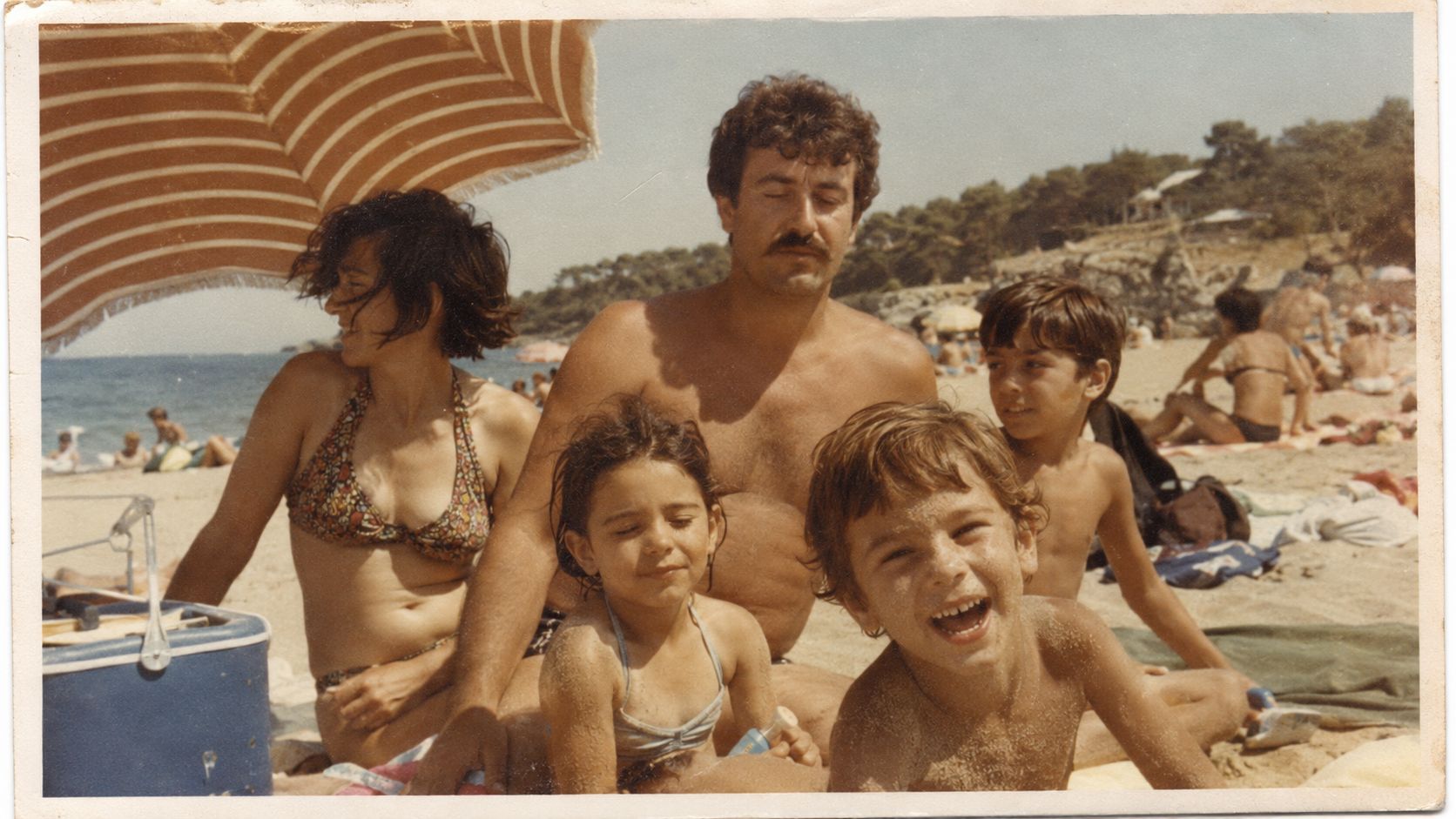
However, we remember our emotions very poorly if we don't write them down. Visual memory survives; inner memory fades. A few years later, we recognize the beach in the photo, but we've forgotten the exact sensation of that evening.
Writing is what transforms an image into a living memory. It's preserving not only what we saw, but what we experienced. And putting it in a book offers that moment a permanence that a photo folder will never provide.
Life's thresholds: celebrating and depositing at the same time
In the middle of the spectrum are life's major transitions. A pregnancy. A birth. An IVF journey, made of waiting, hope, and courage.
These stories are particular because they encompass both poles at once. We write them to celebrate. What could be more beautiful than a book addressed to the child to come, recounting how they were awaited? But we also write them to deposit what we carry: doubts, difficult nights, immense joy, sometimes fear.
A story of pregnancy or IVF then becomes a double offering. To the child, later, who will discover where they come from and how much they were desired. And to oneself, in the moment, because putting words to what one is going through helps to live it fully.
Writing a life story to turn the page
At the other end of the spectrum are the stories we never imagined writing. A bereavement. A divorce. A health ordeal. The loss of a child.
We approach these narratives with great discretion, because they touch on what is most fragile. But we do not avoid them, for they are part of the reality of the people we support. We know, from having helped them, what it can mean to put these words down.
Writing, in these moments, serves to face pain rather than expose it. To give it form, to understand it a little better. To transform a chaos of emotions into a story that has a beginning, a middle, and an end. And which, because it has an end, allows one to close the book. Both literally and figuratively.
Many tell us the same thing at the end: they didn't think putting it into words would help them so much. The story erases nothing. But it accompanies. It helps turn the page without denying anything that has been experienced.
A book for every story, big or small
This is why we prefer the word "story" over "biography." Biography implies an entire life. Story, however, embraces everything: a moment of happiness as well as a difficult journey, a trip as well as a complete life.
The support remains the same, whatever the subject: one simply tells, at one's own pace, and the story takes shape. For short stories as for long ones, the application and, if desired, human presence help to structure the narrative without ever deciding for you what deserves to be said.
What changes is only the scale. And scale is irrelevant. A three-day travel story can be as precious as a sixty-year life story. Because its value is not measured in pages, but in preserved emotion.

Share:
Writing a book about one's life to leave a legacy
Life story: becoming the subject of one's own narrative